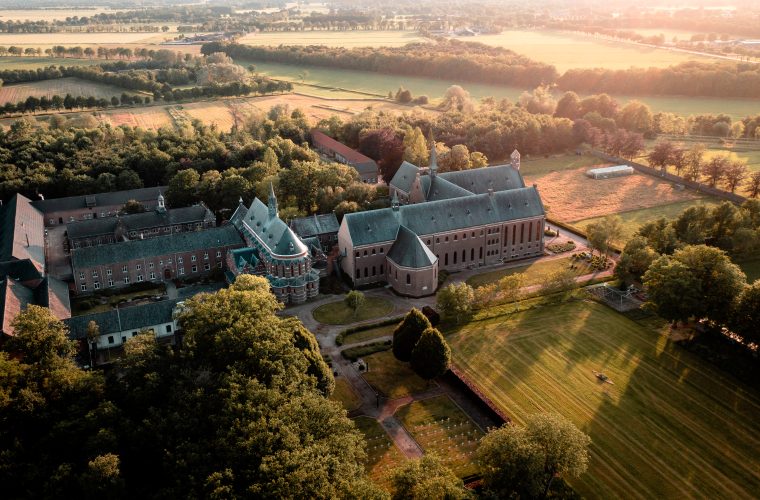
The story of The Achelse Kluis
The beginning.
The Achelse Kluis breathes history. Over the centuries, its inhabitants changed, and it was build, restored, and expanded. The result is a unique complex where various Gothic styles and magnificent structures are present.
The story of The Kluis begins in the 17th century (1656). Religious wars divide the Netherlands into a Protestant north and a Catholic south, roughly corresponding to present-day the Netherlands and Belgium. Because Catholics in the Netherlands were not allowed to publicly practice their faith, Catholic Pastor Tielens fled just over the border to Achel, where he established a rectory and border chapel, which we now know as the gateway building.

The Hermits.
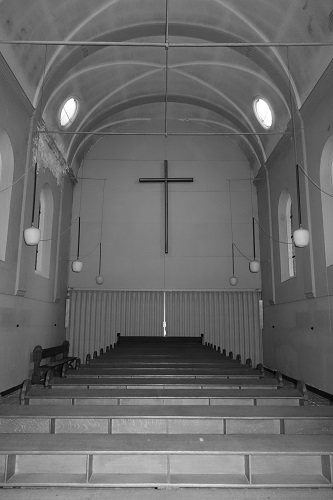
When Catholics were once again allowed to publicly practice their faith, Pastor Tielens left the rectory and returned to Valkenswaard. Shortly after (1686), Peter/Petrus van Eijnatten purchased the same rectory and some land. He then founded a small brotherhood community with 12 other hermits, who called themselves ‘brothers-hermits or hermits’.
They live in complete silence. In 1736, the hermits build a chapel, namely the Eremijten Chapel, which is still part of The Achelse Kluis today. They transform the wild wilderness around The Kluis into a fertile, pleasant place. At the end of the 18th century, the French Revolution approaches. The hermits are forced to leave in 1798. The complex remains empty for 50 years.
Benedictines – Trappists
The tide turns when, in 1845, the Abbey of Westmalle wants to expand and sees The Achelse Kluis as a suitable location. In 1846, a small community arrives here. They had already left Westmalle in 1839 and had lived for several years in an abandoned Capuchin monastery in Meerseldreef. The buildings are thoroughly restored, and not long after, 26 monks take up the religious life once again. When the Trappists became involved with The Kluis, their property consisted of 96 hectares of neglected heathland, very swampy and infertile. This property was gradually expanded to a total of 232 hectares. The land was worked intensely and expertly, allowing The Kluis to start its agricultural activities.
The monks follow the rules of Saint Benedict: ‘Ora et Labora’ – ‘pray and work’. They live in complete silence and are not allowed to speak, if they wish to communicate, they do so with hand gestures. They come together seven times a day to pray, to work the land, and to keep livestock. Moreover, they are dedicated to many crafts.

Highlight of the Saint Benedict Abbey
The Kluis was almost entirely self-sufficient, with a bakery, blacksmith, cheese dairy, brewery, print shop, bookbinding shop, polish factory, and, due to its material activities, eventually started a modest industry producing dishwashing liquids and soap products. At that time, The Kluis employed about thirty workers.
The Kluis continued to grow, and in 1871, the monastery was elevated to an abbey. Between 1880 and 1890, the overcrowding found a solution in three new monastic foundations, namely in the Dutch abbeys of Sion near Diepenveen, Lilbosch near Echt, and in the Belgian abbey of St. Remy in Rochefort.
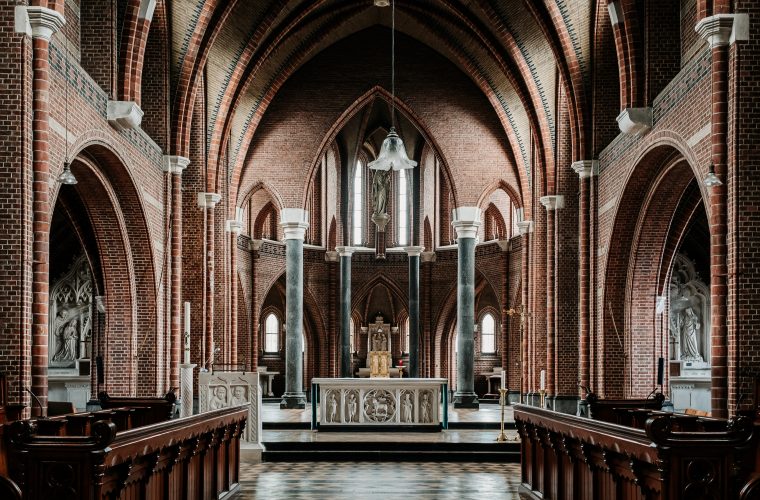
The Kluis reached its peak in 1889, with the number of monks exceeding 120. During this flourishing period, a Neo-Gothic church was built, designed by the famous Pierre Cuypers, the architect of the Rijksmuseum and Amsterdam’s central station.
World War I and II.
In 1914, World War I broke out, and the Trappist monastery became a battleground. The monks had to flee from The Kluis. German soldiers set up an electric ‘Death Wire’ along the border between the Netherlands and Belgium to stop smugglers, spies, and soldiers. The brewing kettles were also taken by the German army. During World War II, The Kluis was not spared either. The Kluis once again fell into the hands of the German occupiers, and the monks had to flee once more. The Kluis suffered significant damage.

The New Neo-Gothic Abbey
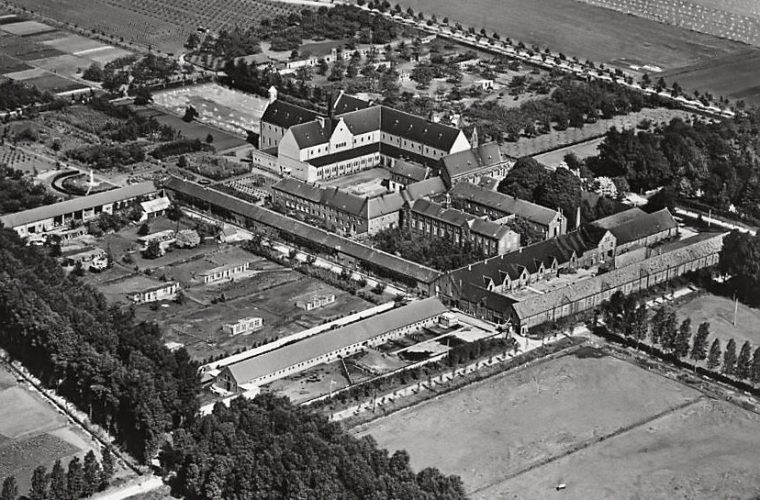
Plans to fully rebuild The Achelse Kluis were already made in 1925. However, this was not achieved, and the matter was only taken up in 1946, after World War II. For this, architect Ritzen was hired. The planned constructions were partially carried out. The result: a remarkable architectural history, ranging from old 18th-century structures from the hermitage period to new buildings of stunning architecture. What is also unique about The Kluis is that the national border runs partially through the buildings, with 95% of the buildings situated on Belgian soil and 5% on Dutch soil.
End of an era, beginning of a new life.
Around 1970, The Kluis had fewer and fewer brothers and could no longer continue a large agricultural business. In the following decades, a small polish factory and a shop provided new sources of income. There was also a revival in brewing, thanks to the knowledge and expertise of the abbeys of Rochefort, Westvleteren, and Westmalle. The monks have proven to be very resourceful throughout the years.
However, in 2020, the last two monks left The Achelse Kluis. Despite the departure of the residents, this place still radiates peace. After centuries of religion, silence, and contemplation, The Achelse Kluis is experiencing a new chapter, with activities being further developed. The brewing activities are continued, and there is a brasserie and an abbey shop. Visitors also have the opportunity to take a guided tour of the abbey with a professional guide.